
10 Platforms to Host Your Website for Free in 2026
Platforms to host your website for free in 2026 are services that allow you to publish your website online without paying for server space or infrastructure. These platforms handle hosting, security, and basic performance optimization, so you can focus on building your site. Many of them support modern technologies like static sites, JavaScript frameworks, and even backend functions. Free hosting is especially useful for beginners, students, and developers who want to test ideas, build portfolios, or launch simple projects without financial investment.
These platforms usually come with some limitations, such as storage limits, bandwidth restrictions, or branded subdomains. However, they still provide enough features to build and deploy professional-looking websites. Some platforms also offer easy integration with Git repositories, allowing automatic deployment whenever you update your code. This makes the development process faster and more efficient. Choosing the right platform depends on your project needs, such as performance, scalability, and ease of use.
Vercel
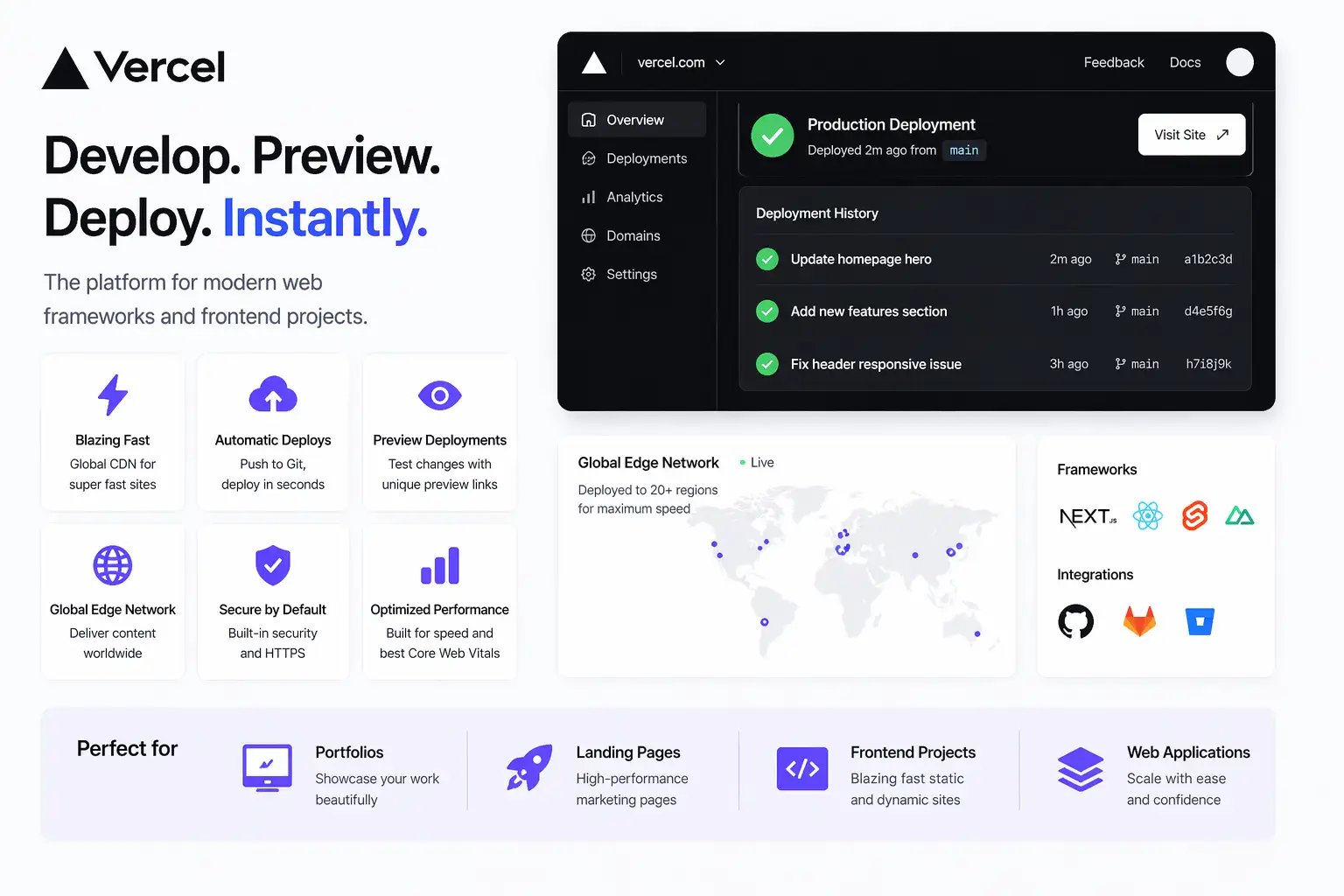
Vercel is one of the best platforms for hosting modern websites, especially those built with frameworks like Next.js. It offers fast global deployment using a CDN, helping your site load quickly from different parts of the world. One of its biggest advantages is automatic deployment from GitHub, so every time you push code, your site can update instantly. Vercel also provides preview links, making it easy to test changes before publishing. For beginners, it is simple to use, while advanced users benefit from performance optimization features. It is ideal for portfolios, landing pages, frontend projects, and modern web applications.
Netlify
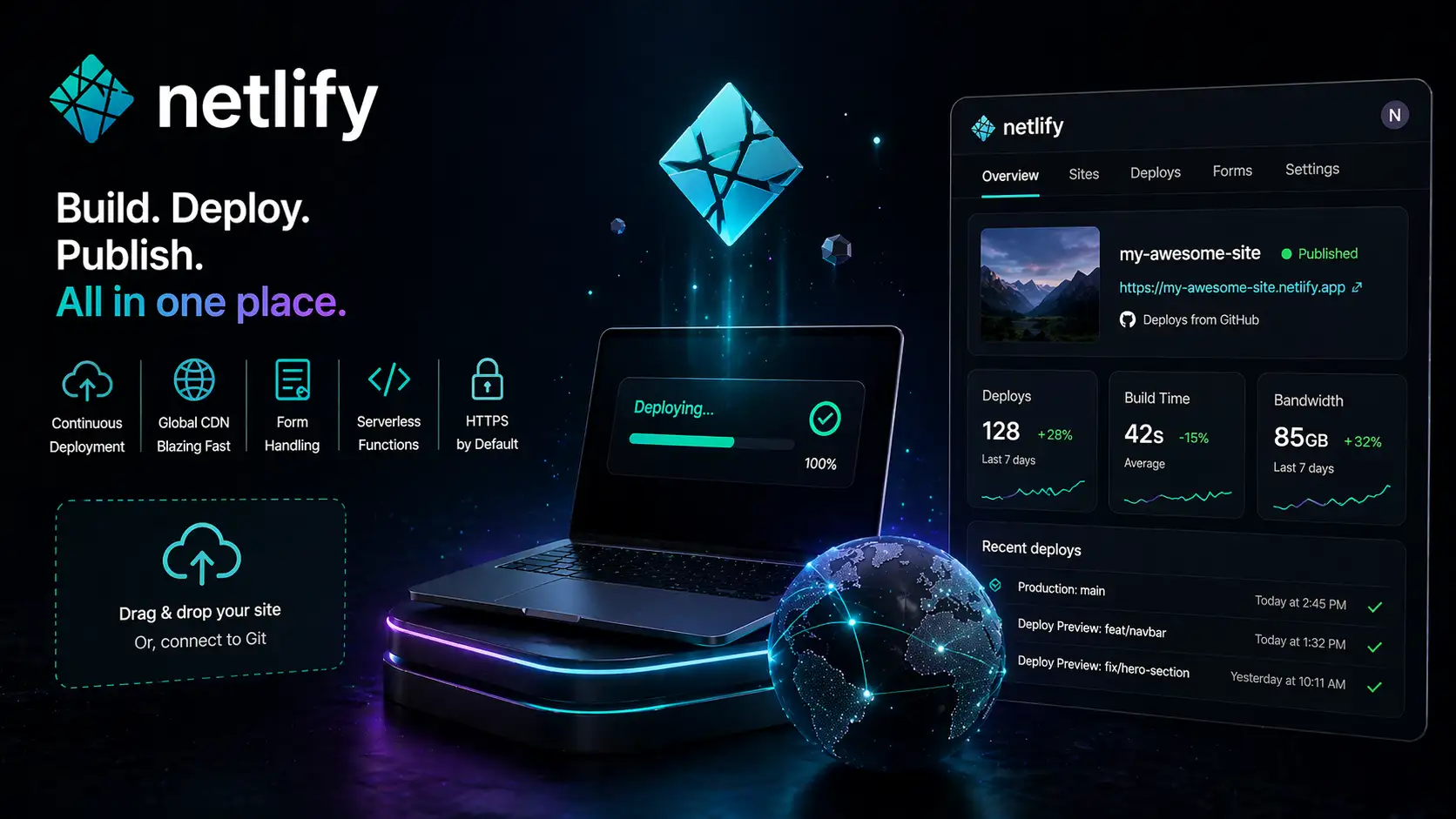
Netlify is a popular free hosting platform for static websites and frontend projects. It provides continuous deployment, meaning your website updates automatically when you push changes to your repository. Netlify also includes useful features like form handling, serverless functions, and custom domain support. Its drag-and-drop deployment option makes it beginner-friendly, allowing you to upload a simple site without a complex setup. Performance is strong because of its global CDN, which helps pages load faster for visitors. It is a great choice for personal projects, blogs, documentation sites, and small business websites.
GitHub Pages
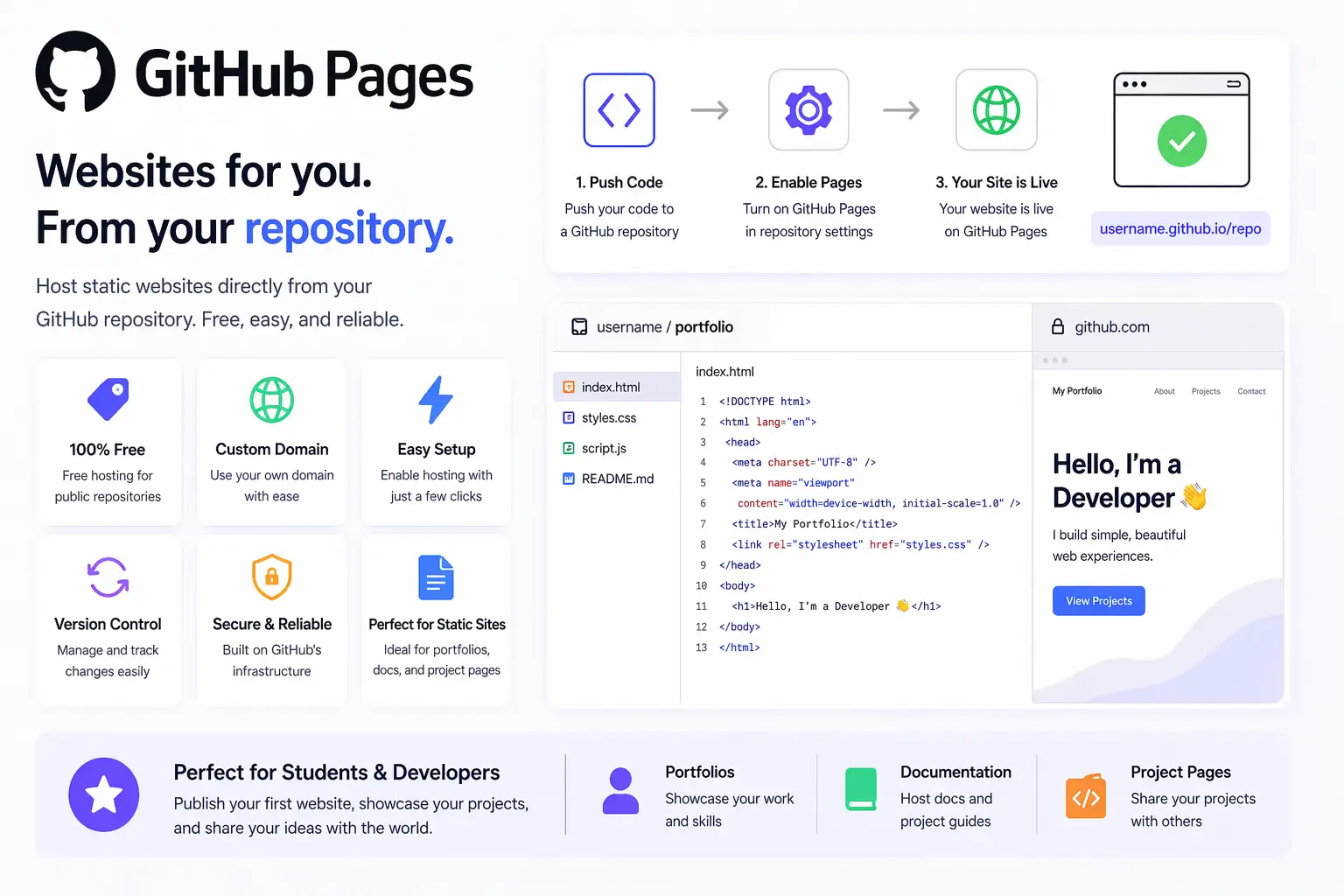
GitHub Pages allows you to host websites directly from your GitHub repository. It is completely free and works especially well for simple static websites like portfolios, project pages, and documentation sites. Once your code is pushed to a repository, you can enable hosting with just a few settings. It integrates naturally with version control, making it easy to manage updates and track changes over time. While it does not support advanced backend features, it is reliable, widely used, and beginner-friendly. GitHub Pages is ideal for students and developers who want to publish their first website online.
Firebase Hosting
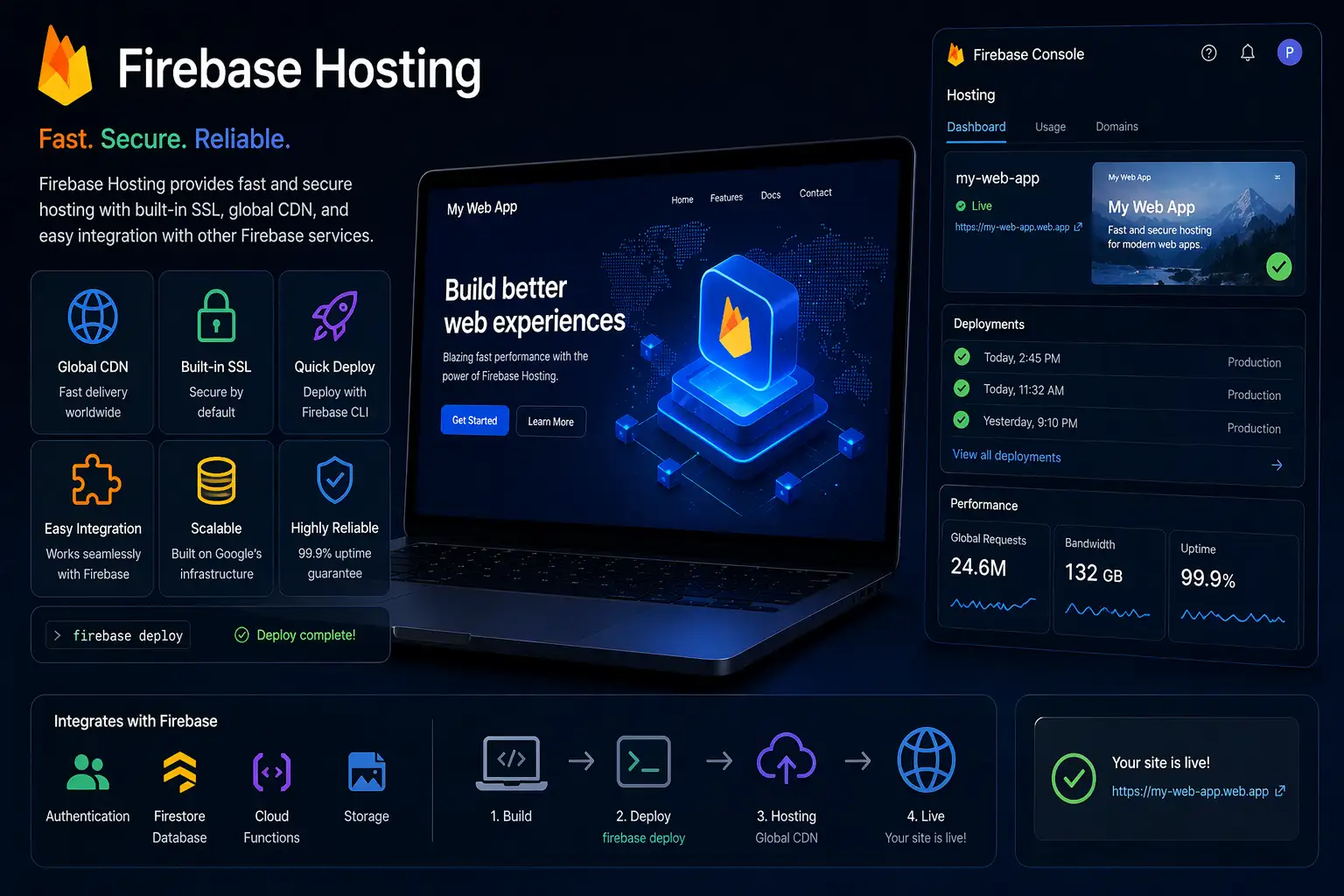
Firebase Hosting, by Google, provides fast and secure hosting with built-in SSL. It supports static content and can work with dynamic web apps, making it flexible for different types of projects. One of its strengths is easy integration with other Firebase services, such as authentication, databases, and cloud functions. Deployment is quick using the Firebase CLI, which makes updates straightforward once your project is configured. Firebase Hosting also uses global infrastructure to deliver content efficiently. It is a strong option for developers building web apps that may need backend functionality as the project grows.
Cloudflare Pages
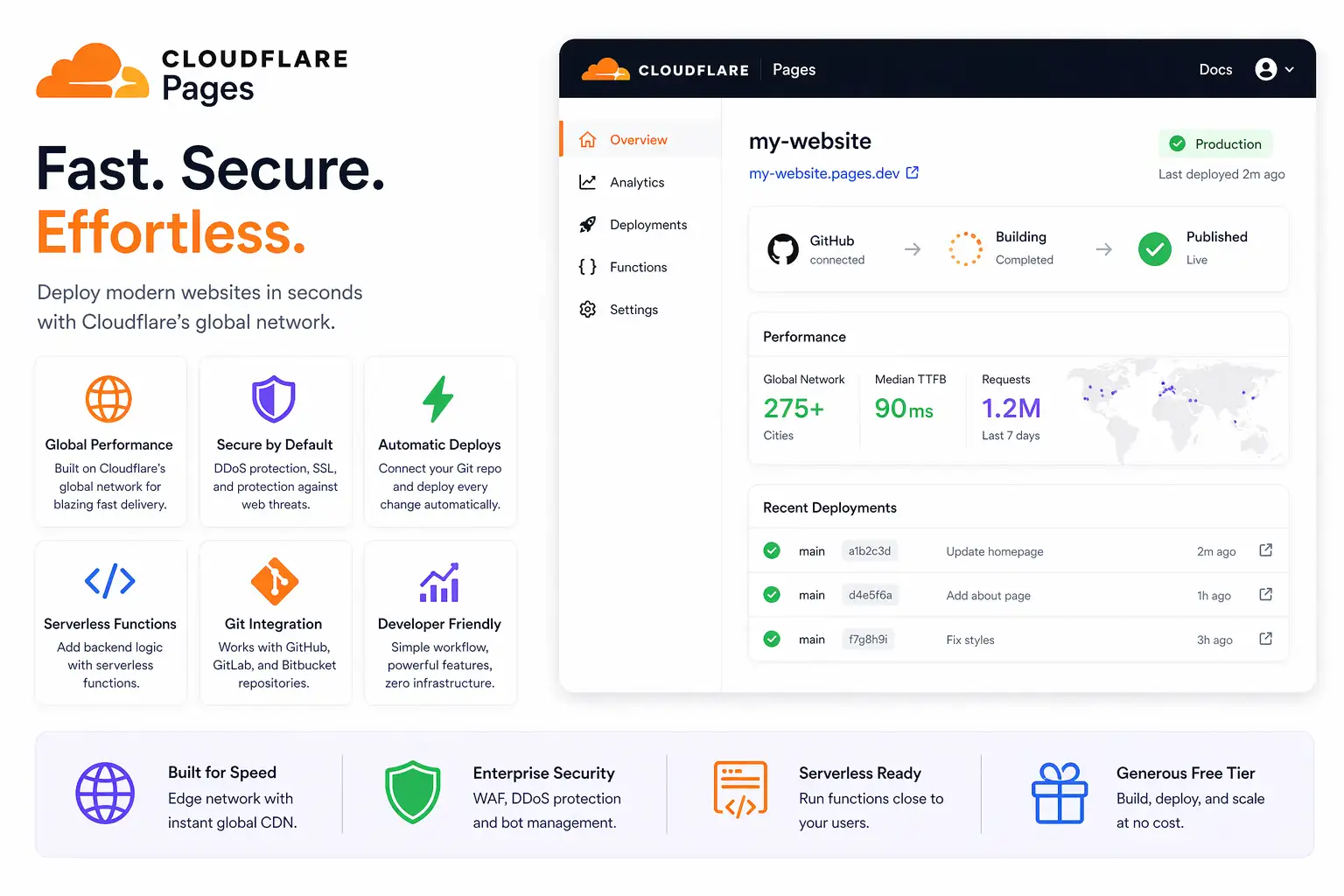
Cloudflare Pages is a modern hosting platform designed for speed, security, and simple deployment. It uses Cloudflare's global network to deliver website content quickly across many regions. The platform integrates with Git repositories, so your website can build and deploy automatically whenever you update your code. One standout benefit is Cloudflare's security layer, including protection against common web threats and DDoS attacks. Cloudflare Pages also supports serverless functions, allowing developers to add backend logic when needed. It is a great choice for developers who want free hosting with strong performance and security.
Render
Render is a flexible hosting platform that supports static sites, web apps, APIs, and backend services. It offers free hosting options for basic projects, making it suitable for beginners who want to move beyond simple static websites. Render provides automatic deployment from GitHub and includes practical features like SSL certificates and custom domain support. It is more powerful than many basic static hosting platforms because it can handle backend applications and full-stack projects. This makes Render useful for developers who want to experiment with real-world app hosting without paying at the start.
Surge
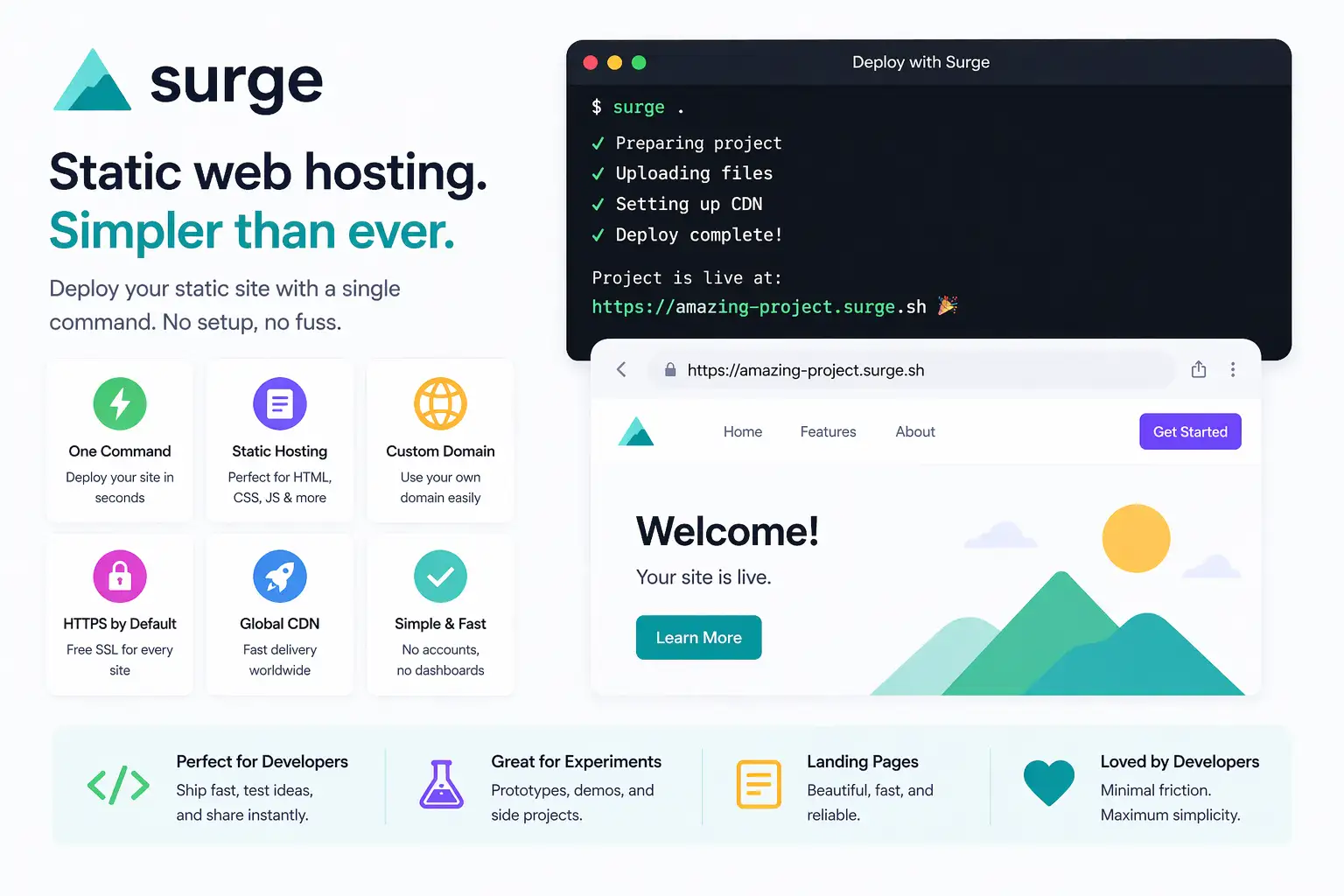
Surge is a simple and lightweight hosting platform focused on static websites. It allows you to deploy a site using a single command, which makes publishing fast and easy. There is no complex setup required, so beginners can quickly host landing pages, experiments, or small frontend projects. Surge does not offer advanced backend support, but that simplicity is also its biggest strength. It is often used by developers who want a straightforward hosting solution for quick tests, prototypes, and static pages. If you want minimal friction, Surge is one of the easiest platforms to try.
InfinityFree
InfinityFree is a traditional free hosting platform that supports PHP and MySQL, unlike many modern static hosting services. This makes it suitable for dynamic websites, including simple WordPress experiments and PHP-based projects. It offers generous free hosting features within fair usage limits, which can be helpful for beginners learning how classic web hosting works. However, performance and reliability may not match premium hosting providers or modern deployment platforms. InfinityFree is a good option if you want to explore traditional hosting concepts like control panels, databases, and server-side websites without spending money.
000webhost
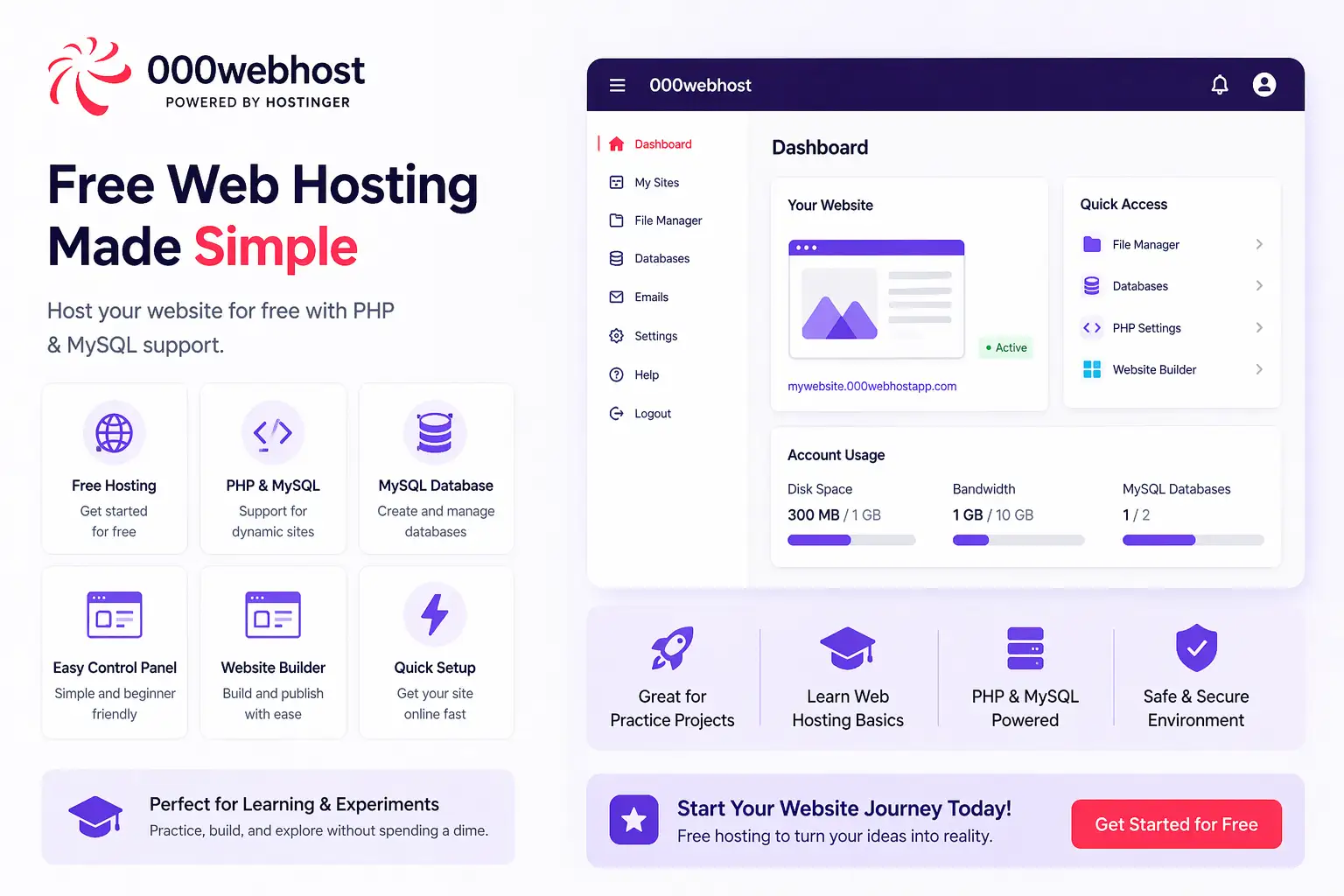
000webhost is another beginner-friendly platform that offers free website hosting with PHP and MySQL support. It includes a simple control panel and website-building tools, making it easier for non-developers to create and publish websites. While it has limitations in performance, storage, and uptime compared with paid hosting, it can still be useful for learning and testing ideas. Beginners often use it to understand how hosting accounts, databases, and website files work together. It is best for practice projects, small experiments, and early learning rather than large professional websites.
Glitch
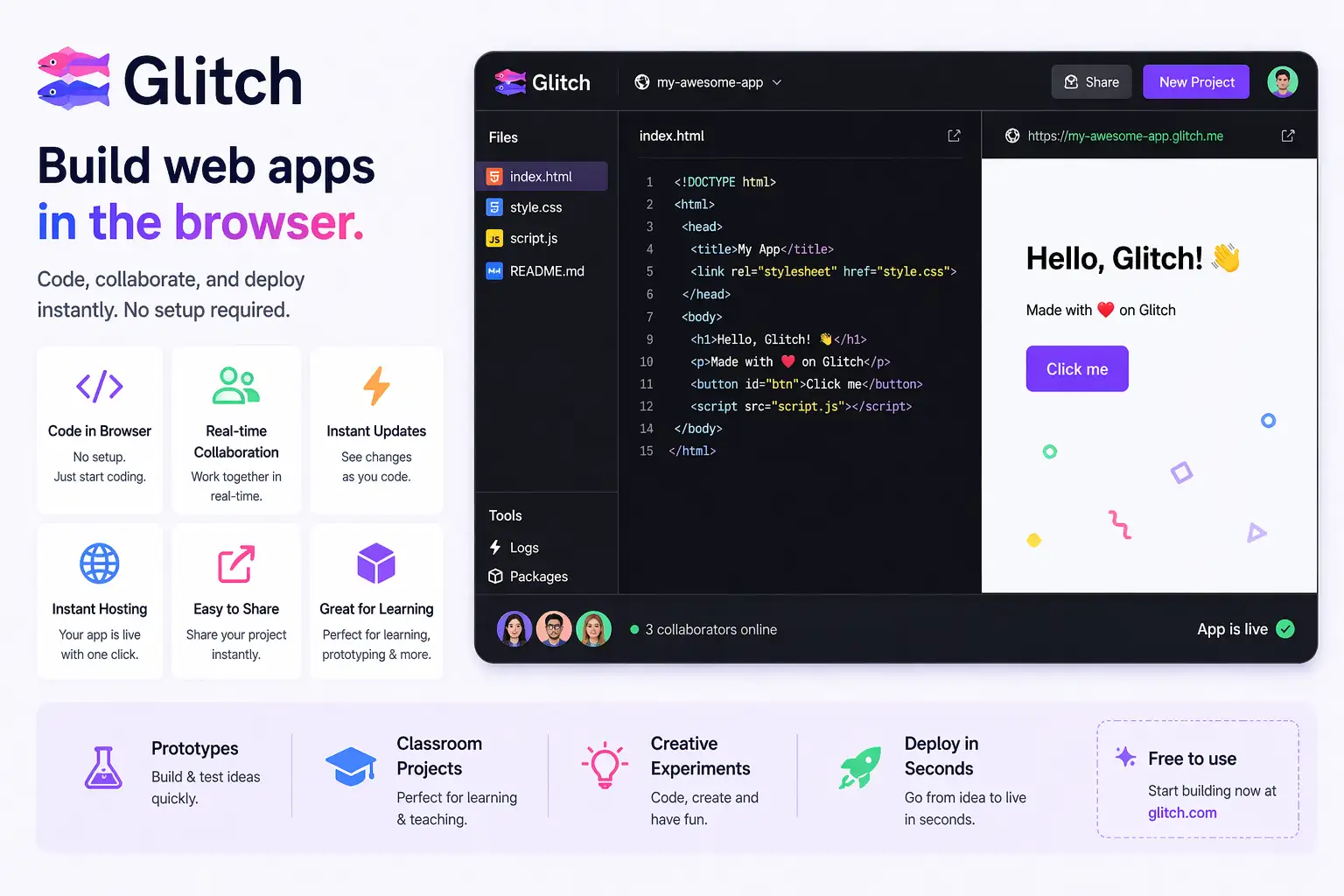
Glitch is a unique platform that allows you to build and host web applications directly in the browser. It supports real-time collaboration, meaning multiple people can work on the same project together. You can instantly see changes as you edit code, which makes development interactive and beginner-friendly. Glitch is ideal for small projects, prototypes, classroom exercises, and creative coding experiments. While it may not be the best choice for large-scale production websites, it is excellent for learning, testing ideas, and quickly sharing functional web apps with others.
Summary
Free platforms to host your website in 2026 make it easier than ever to publish projects online without paying for infrastructure. These services handle deployment, security, and basic performance, allowing beginners and developers to focus on building their sites. From static hosting to full-stack support, each platform offers different strengths and limitations. Choosing the right one depends on your needs, such as speed, scalability, custom domains, backend support, and ease of use. Overall, free hosting is a great starting point for portfolios, learning projects, prototypes, and small websites.
FAQ
What is the best free platform to host a website?
Vercel and Netlify are great choices for modern frontend websites, while GitHub Pages is excellent for simple static projects. The best option depends on whether you need static hosting, backend support, custom domains, or automatic deployment.
Are free hosting platforms good for professional websites?
Free hosting platforms can work well for portfolios, demos, landing pages, and small projects. For large business websites, ecommerce stores, or high-traffic applications, paid hosting is usually better because it offers stronger reliability, support, and scalability.
Do free hosting platforms support custom domains?
Yes, many free hosting platforms support custom domains, including Vercel, Netlify, Cloudflare Pages, Firebase Hosting, and Render. Some platforms may require extra setup through DNS settings.
Is free website hosting safe and reliable?
Most modern free hosting platforms provide SSL security and reliable basic performance. However, free plans may include limits on bandwidth, build minutes, storage, server resources, or uptime guarantees compared with paid plans.
Can I host a website for free without coding?
Yes, some platforms offer drag-and-drop deployment or website builders, while others require basic Git or command-line knowledge. If you want the easiest no-code path, traditional free hosts with website builders may be simpler than developer-focused platforms.